
While the House vote represents a major step in advancing the bill, its prospects in the Senate are widely seen as uncertain without bipartisan support.

What the Bill Would Do
The Protect Children’s Innocence Act would create a new federal criminal offense for providing gender‑affirming medical care to anyone under 18 years old.
Under the bill’s text, healthcare providers — including doctors, nurses, and “any person” who knowingly performs procedures or supplies medications intended to alter a minor’s body to align with a gender different from their biological sex — could face fines, imprisonment for up to 10 years, or both if convicted.
Specifically, the legislation would cover:
Puberty blockers, which delay the physical changes associated with puberty
Hormone therapies, such as estrogen or testosterone
Gender‑affirming surgeries or procedures designed to change physical traits
The bill does include limited exceptions.
Importantly, the bill prohibits criminal prosecution of individuals who receive gender‑affirming care, making only the act of providing or facilitating such care to minors a potential felony.
Legislative language also revises existing federal law on female genital mutilation (FGM), broadening the scope of prohibited conduct and clarifying that minors who undergo procedures are not subject to prosecution.
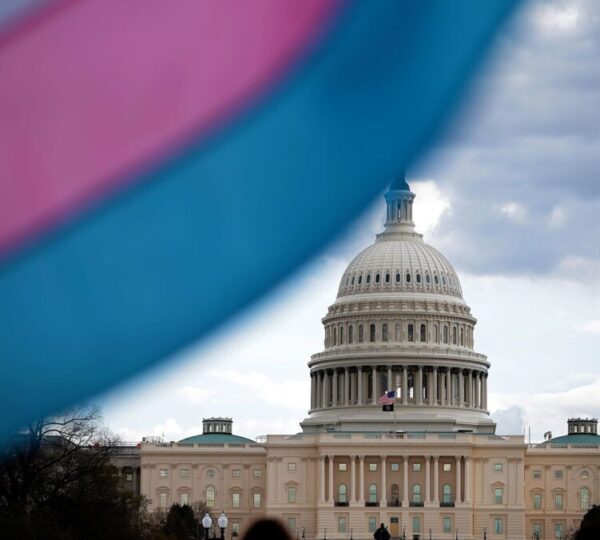
Political Dynamics and Passage in the House
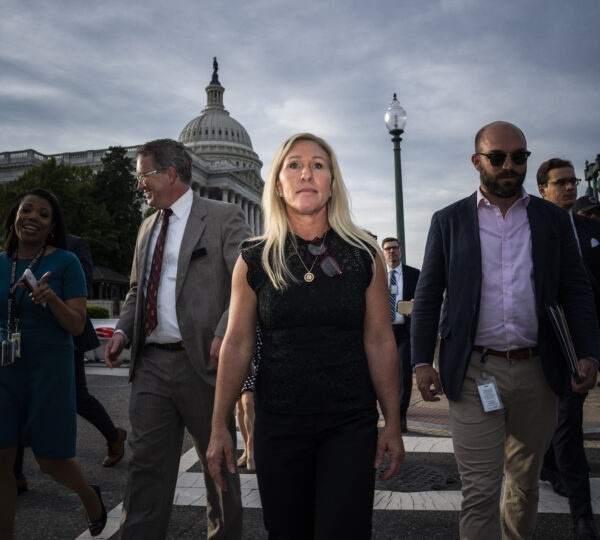
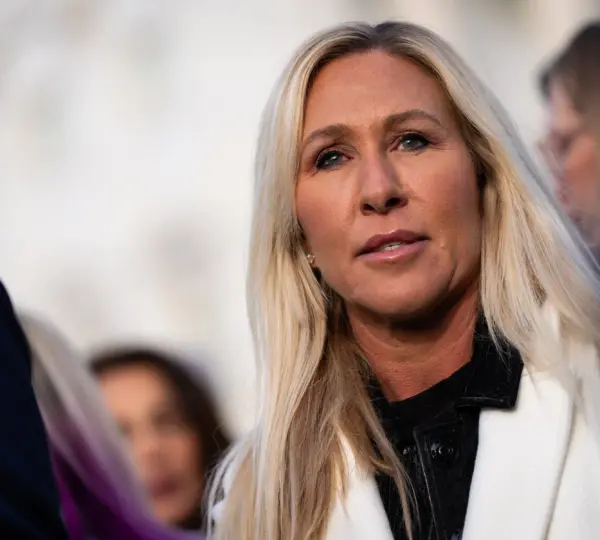
The measure was introduced by Republican Representative Marjorie Taylor Greene of Georgia, a longtime and outspoken opponent of gender‑affirming care for minors.
After years of trying to bring her legislation to the House floor, Greene secured a vote by striking a deal with House leadership:
she agreed to support the National Defense Authorization Act (NDAA), a must‑pass defense bill, in exchange for floor consideration of her bill.
Three Democratic members — Henry Cuellar and Vicente Gonzalez of Texas and Don Davis of North Carolina — joined the majority, while four Republicans — Gabe Evans (Colorado), Brian Fitzpatrick (Pennsylvania), Mike Lawler (New York), and Mike Kennedy (Utah) — voted against it.
The vote reflects the House’s current political balance and the influence of the ultraconservative wing of the Republican Party, which has made limiting gender‑affirming care for minors a priority.
Greene and her allies have described the bill as fulfilling campaign commitments to restrict such care nationwide, aligning with broader Republican priorities including executive actions by President Donald Trump earlier in his term to curtail access to gender‑affirming medical treatments.
Despite its passage in the House, the bill faces a high hurdle in the Senate, where most Republicans and all Democrats would need to reach a 60‑vote threshold to advance the measure.
Given the sharp partisan divide, most analysts consider its enactment into law unlikely without significant changes or compromise.
Supporters’ Arguments
Supporters of the bill, primarily conservative Republicans, argue that federal action is necessary to protect minors from irreversible medical interventions.
Proponents characterize gender‑affirming treatments for youth as premature or harmful, claiming that children are too young to make decisions with long‑term physical consequences and that medical providers are promoting unsafe practices for profit or ideological reasons.
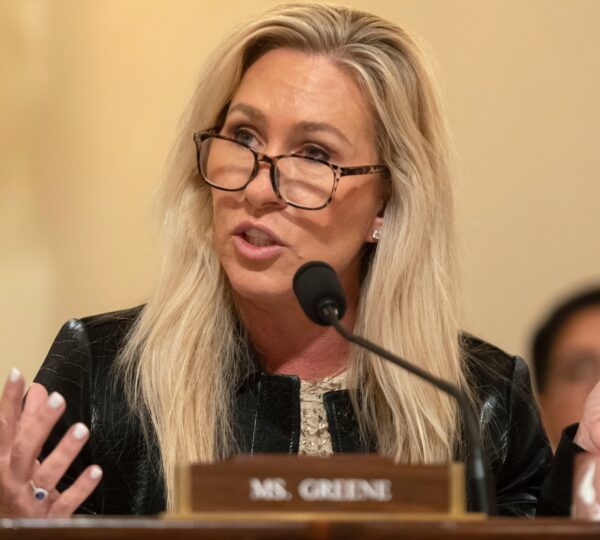
Rep. Greene, advocating for the bill on the House floor, framed the legislation as a fulfillment of campaign promises and a moral imperative to safeguard children.
She pointed to cases of minors undergoing significant procedures — such as breast reduction surgery — as evidence that federal prohibition is required to prevent what she and allies describe as “radical” medical interventions on youth.
Other supporters have echoed similar sentiments, asserting that gender‑affirming care does not constitute “lifesaving care” and labeling it as harmful or abusive when applied to minors.
These lawmakers describe the bill as a means to uphold childhood innocence and prioritize physical safety over what they view as ideological influences in medicine.
Opposition and Criticism
Opponents of the bill, including Democrats, civil rights organizations, and major medical associations, argue that it represents an unprecedented federal intrusion into deeply personal medical decisions.
Critics contend that the legislation would undermine parental rights, interfere with doctor‑patient relationships, and remove lawful, evidence‑based healthcare options for transgender youth — including puberty blockers and hormone therapy — which many medical professionals consider essential to the well‑being of certain adolescents.
Medical experts and professional organizations such as the American Medical Association, American Psychological Association, and American Academy of Pediatrics generally support gender‑affirming care as part of individualized treatment plans determined by qualified clinicians, patients, and families.
They warn that limiting access to such care could exacerbate mental health challenges and increase risks for vulnerable youth.
Democratic lawmakers have sharply criticized the bill as ideologically driven and harmful.
Representative Jamie Raskin, a Democrat from Maryland, questioned whether political leaders know more about child welfare than parents themselves, arguing that political overreach endangers family autonomy and trust.
Representative Mark Takano of California noted that the surgical procedures referenced by proponents are extremely rare and that the bill’s broader effect would be to ban recognized medications from entire groups of people.
Rep. Sarah McBride, the first openly transgender member of Congress, slammed Republican efforts as an obsession with transgender people rather than attention to broader healthcare challenges, emphasizing that the LGBTQ+ community represents roughly 1 percent of the population yet receives disproportionate legislative scrutiny.
Civil rights organizations such as the American Civil Liberties Union (ACLU) have pledged legal challenges against the effort, describing it as unconstitutional and an undue federal intrusion into private medical decisions.
The ACLU specifically highlighted concerns that the legislation would uniquely target transgender youth while allowing non‑consensual surgeries on intersex infants in certain situations.
Second Bill on Medicaid Coverage
In addition to the Protect Children’s Innocence Act, a related Republican‑backed bill seeks to prohibit Medicaid coverage of gender‑affirming care for minors, a move that could effectively limit access even where services remain legal.
This separate measure, supported by Greene and other conservative lawmakers, is scheduled for a House vote later in the week.
Critics argue it would compound access issues for families with fewer financial resources.
Legal Context and Broader Landscape
The House vote is part of a wider national pattern of legislative efforts to limit gender‑affirming care for minors.
Over two dozen states have enacted laws or regulations restricting such care, with a range of penalties and enforcement mechanisms at the state level.
Some, like New Hampshire’s 2025 law, make providing hormone therapy and puberty blockers to minors a felony under state law, demonstrating the expanding scope of such measures beyond Congress.
In 2025, the U.S. Supreme Court also upheld a Tennessee law restricting gender‑affirming care for minors, further emboldening lawmakers seeking federal action.
At the same time, other branches of government, including federal agencies, are proposing regulatory changes aimed at curbing gender‑affirming care access under Medicare and Medicaid, reflecting a broader policy push from the Trump administration.
These rules, still subject to public comment and legal challenges, could significantly shape healthcare providers’ practices nationwide.
Public Response and Next Steps
The bill’s passage has sparked a strong public response across social media, advocacy groups, and political circles, highlighting the deep cultural and ideological divides surrounding LGBTQ+ rights and healthcare policy in the United States.
Online discussions have ranged from support for carving out what some see as protective measures for minors to fierce opposition characterizing the bill as government overreach threatening individual freedoms.
Despite the House vote, the measure’s advancement is far from certain.
In the Senate, the current legislative thresholds and partisan dynamics make passage unlikely without meaningful negotiations or amendments.
Regardless of its fate in the upper chamber, the Protect Children’s Innocence Act has already cemented itself as a defining flashpoint in the ongoing national debate over transgender rights and healthcare.
Conclusion: A Significant But Uncertain Turning Point
The House’s approval of the Protect Children’s Innocence Act marks a significant escalation in federal efforts to regulate access to gender‑affirming care for minors.
By setting criminal penalties for providers at the federal level, the bill illustrates the intensifying focus on transgender healthcare within American politics and the broader cultural divide over LGBTQ+ issues.
While supporters regard it as necessary protection for children, opponents view it as a dangerous infringement on personal liberties, medical decision‑making, and family rights. As the bill moves forward — or ultimately stalls in the Senate — its passage in the House reflects the current political landscape and foreshadows continued debate over how the nation addresses these deeply personal and complex issues.
