
Opponents of the bill, including Democrats, civil rights organizations, and major medical associations, argue that it represents an unprecedented federal intrusion into deeply personal medical decisions.
Medical experts and professional organizations such as the American Medical Association, American Psychological Association, and American Academy of Pediatrics generally support gender‑affirming care as part of individualized treatment plans determined by qualified clinicians, patients, and families.
They warn that limiting access to such care could exacerbate mental health challenges and increase risks for vulnerable youth.
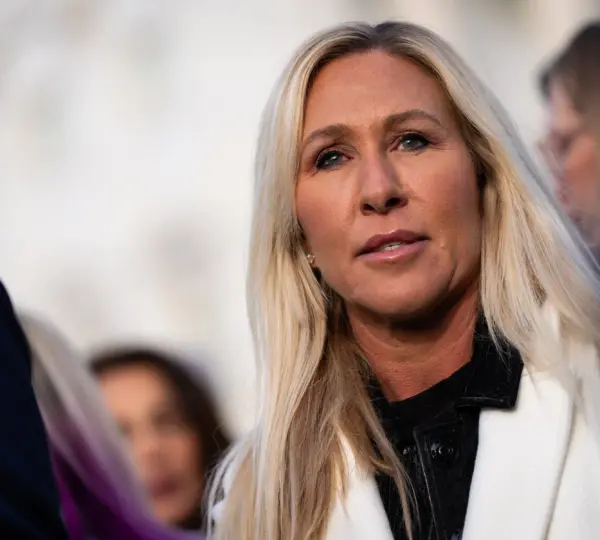
Democratic lawmakers have sharply criticized the bill as ideologically driven and harmful.
Representative Jamie Raskin, a Democrat from Maryland, questioned whether political leaders know more about child welfare than parents themselves, arguing that political overreach endangers family autonomy and trust.
Representative Mark Takano of California noted that the surgical procedures referenced by proponents are extremely rare and that the bill’s broader effect would be to ban recognized medications from entire groups of people.
Rep. Sarah McBride, the first openly transgender member of Congress, slammed Republican efforts as an obsession with transgender people rather than attention to broader healthcare challenges, emphasizing that the LGBTQ+ community represents roughly 1 percent of the population yet receives disproportionate legislative scrutiny.
Civil rights organizations such as the American Civil Liberties Union (ACLU) have pledged legal challenges against the effort, describing it as unconstitutional and an undue federal intrusion into private medical decisions.
Second Bill on Medicaid Coverage
In addition to the Protect Children’s Innocence Act, a related Republican‑backed bill seeks to prohibit Medicaid coverage of gender‑affirming care for minors, a move that could effectively limit access even where services remain legal.
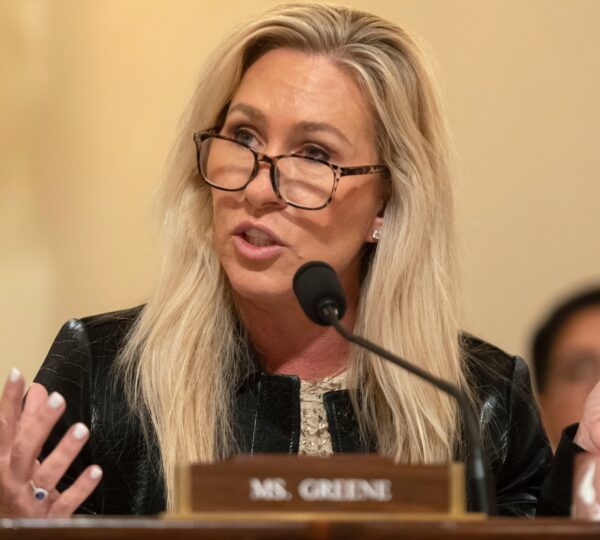
This separate measure, supported by Greene and other conservative lawmakers, is scheduled for a House vote later in the week.
Critics argue it would compound access issues for families with fewer financial resources.
Legal Context and Broader Landscape
The House vote is part of a wider national pattern of legislative efforts to limit gender‑affirming care for minors.
Over two dozen states have enacted laws or regulations restricting such care, with a range of penalties and enforcement mechanisms at the state level.
In 2025, the U.S. Supreme Court also upheld a Tennessee law restricting gender‑affirming care for minors, further emboldening lawmakers seeking federal action.
At the same time, other branches of government, including federal agencies, are proposing regulatory changes aimed at curbing gender‑affirming care access under Medicare and Medicaid, reflecting a broader policy push from the Trump administration.
These rules, still subject to public comment and legal challenges, could significantly shape healthcare providers’ practices nationwide.
Public Response and Next Steps
The bill’s passage has sparked a strong public response across social media, advocacy groups, and political circles, highlighting the deep cultural and ideological divides surrounding LGBTQ+ rights and healthcare policy in the United States.
Online discussions have ranged from support for carving out what some see as protective measures for minors to fierce opposition characterizing the bill as government overreach threatening individual freedoms.
Despite the House vote, the measure’s advancement is far from certain.
In the Senate, the current legislative thresholds and partisan dynamics make passage unlikely without meaningful negotiations or amendments.
Regardless of its fate in the upper chamber, the Protect Children’s Innocence Act has already cemented itself as a defining flashpoint in the ongoing national debate over transgender rights and healthcare.
Conclusion: A Significant But Uncertain Turning Point
The House’s approval of the Protect Children’s Innocence Act marks a significant escalation in federal efforts to regulate access to gender‑affirming care for minors.
By setting criminal penalties for providers at the federal level, the bill illustrates the intensifying focus on transgender healthcare within American politics and the broader cultural divide over LGBTQ+ issues.
While supporters regard it as necessary protection for children, opponents view it as a dangerous infringement on personal liberties, medical decision‑making, and family rights. As the bill moves forward — or ultimately stalls in the Senate — its passage in the House reflects the current political landscape and foreshadows continued debate over how the nation addresses these deeply personal and complex issues.
