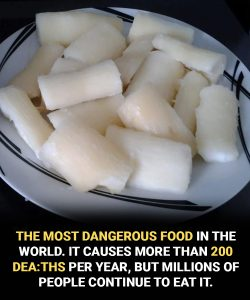
Understand how cassava can release cyanide and learn about the risks of improper preparation.
This toxic cassava, if poorly prepared, has already caused outbreaks and even the neurological disease konzo.
The good news? With simple care, the danger disappears and the flavor remains.
What makes cassava potentially dangerous?
When the root is grated or bitten, enzymes release cyanide — the same poison famous in spy stories.
Continue reading…
