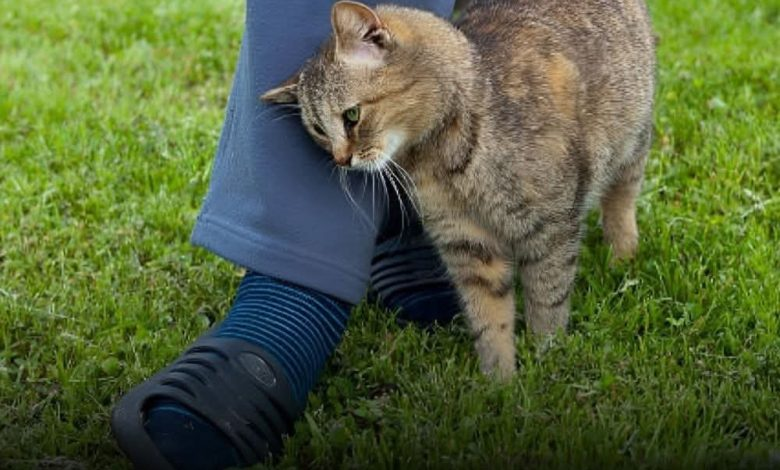
Sometimes bunting is investigative. Cats may rub objects or people to explore and gather information, similar to how human babies explore with their hands and mouths. In this case, rubbing doesn’t necessarily mean affection. It’s wise to wait for additional signs before attempting to pet a newly met cat.
Cats can also use rubbing to communicate needs, much like humans point with fingers. For example:
- Rubbing a kitchen cabinet could indicate hunger.
- Rubbing a door might signal a desire to go outside.
- Aggressive headbutts could indicate discomfort or a need for attention.
When to Consult a Veterinarian
Other Common Cat Behaviors
The Misunderstood Tail Wag
Unlike dogs, a rapidly moving cat tail can indicate excitement, annoyance, or frustration. A focused, twitching tail may signal readiness to pounce on a toy or prey.
Knocking Things Off Tables
Cats knocking objects off counters is normal. It’s a way to play, explore, express boredom, or demand attention.
The Belly Rub Trap
When a cat exposes its belly, it’s a sign of trust, not necessarily an invitation for petting. Dr. Sam Meisler, DVM, notes that touching the belly can provoke a bite or scratch. Respecting boundaries builds trust and closeness.
By learning to interpret these signals—from affectionate rubs to a flicking tail—you can deepen your connection and better understand your unique feline companion.
