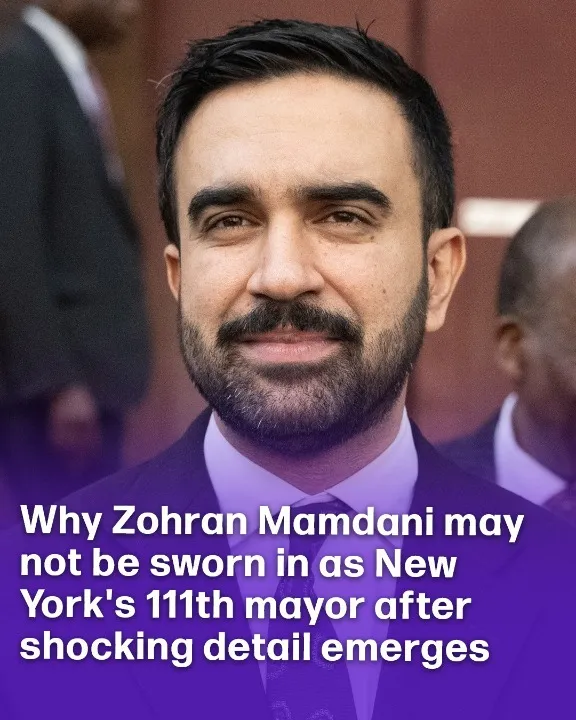
Zohran Mamdani’s recent election as New York City’s next mayor has captured national attention. At only thirty-four, he represents a new generation of leadership, and his election carries deep historical significance. He is the city’s first Muslim mayor, the first mayor of South Asian heritage, and the first New York mayor born on the African continent. For many New Yorkers, especially older residents who have witnessed the city evolve through decades of cultural and political change, his story reflects the city’s ongoing journey toward broader representation.
Yet as the excitement builds for his January 2026 swearing-in, an unexpected question has surfaced: Will he be recognized as New York’s 111th mayor, as originally announced, or does an overlooked historical detail make him the 112th?
A Small Historical Error With Big Symbolic Implications
The matter of a mayor’s number might seem ceremonial, but for a city as old and storied as New York, those numbers carry meaning. They help mark eras of leadership, record political transitions, and anchor moments of civic history.
While researching early mayors and their roles in the economic activities of the seventeenth century, historian Paul Hortenstine uncovered a discrepancy that most scholars and officials had overlooked. His work led him deep into city archives, where he found records concerning Matthias Nicolls, an early mayor who served during New York’s Dutch and English transition period.
Nicolls, long recognized as the city’s sixth mayor, did not serve just one term. The archival documents show he held the office in 1672 and again in 1675. According to modern counting standards used for positions like the U.S. presidency, these non-consecutive terms would each receive their own numerical designation. In other words, he should have been counted twice.
Because that second term was never given its proper number, a ripple effect followed. Every mayor after Nicolls has technically been off by one.
Hortenstine shared his findings with the mayor-elect’s office in hopes of correcting the historical record. He emphasized that the original oversight likely occurred in the seventeenth century, when recordkeeping lacked the consistency and precision expected today.
Earlier Clues That Went Unaddressed
Interestingly, this is not the first time a historian has flagged the error. In 1989, Peter R. Christoph published research raising questions about why New York’s mayoral history appeared to skip a number during Nicolls’s era. Christoph wondered how the city’s long succession of mayors—nearly one hundred at the time—had managed to retain an incorrect count without a correction.
At the time, his findings were noted but didn’t lead to a formal change. Historical records often take years, even decades, to be revisited, especially when the issue does not directly affect governance. With the discovery resurfacing during a high-profile administration change, there is renewed interest in addressing the inconsistency.
For older New Yorkers who have seen debates over street names, monuments, and city archives, this moment is a reminder that history is not a fixed document. It is an evolving record that occasionally needs attention from each generation.
What the Mix-Up Means for Zohran Mamdani
Instead, the discussion is purely ceremonial—an acknowledgment of accuracy in the city’s long and complex history.
Still, for a leader whose election marks several firsts, the possibility of becoming the officially recognized 112th mayor adds another unique footnote to his place in New York’s story.
As Mamdani prepares for his transition into City Hall, this historical discovery has sparked curiosity among residents. Many longtime New Yorkers enjoy reflecting on how small archival details can bring new insights into the city’s past.
Why These Details Matter to a City With Such a Long Memory
Cities with deep histories tend to value precision. New York’s identity is shaped by its layers of stories, from the colonial days to the modern skyline. When new information brings clarity, it provides a chance to honor the full scope of that story.
The question of mayoral numbering may feel like a minor clerical issue, yet it also speaks to how history is preserved. Older readers who remember earlier periods of change—from postwar mayors to the financial challenges of the 1970s to the city’s resurgence—understand the importance of accuracy in civic records. Generations rely on these records to track the city’s evolution and to understand how leadership has guided it through triumphs and challenges.
Correcting the count would not alter the past, but it would ensure that the record reflects it faithfully.
Will the City Make an Official Change?
At this point, no decision has been announced. Adjusting the numbering would require city officials to review the historical evidence and determine how best to update public records. The move would be largely symbolic, involving adjustments to display materials, digital listings, or future publications referencing city leadership.
For now, the discovery stands as an interesting backdrop to Mamdani’s upcoming inauguration. Whatever number is eventually assigned to his place in the city’s lineage of mayors, the significance of his election remains unchanged.
A New Chapter Begins
As January approaches, Zohran Mamdani continues preparing to take the helm of a city known for its resilience and remarkable diversity. His personal story resonates with many New Yorkers, especially those who have watched the city expand its definition of leadership across the decades.
This unexpected historical twist may not alter his responsibilities, but it adds a reflective moment to his arrival. In a city defined by its past and propelled by its future, even a centuries-old detail can rise to the surface and remind residents of the long journey that led to this moment.
Ultimately, Mamdani steps forward as a groundbreaking leader, ready to guide New York into its next chapter, with a small but memorable reminder from the archives accompanying his first days in office.

Doctors reveal the one bl00d type which has the highest risk of getting pancreatic canc3r
While IT’S handed down from our parents and we all have one, how does your…

Flight Attendant Came up to Me and Said, ‘Stay after Landing Please, the Pilot Wants to Talk to You Personally’
I thought my big business trip to LA was going to be just another day…

A Natural Miracle for Brain Health, Inflammation, and Joint Pain
Say good bye to the expensive pharmacy treatments — sage is a natural remedy known…

Slow Cooker 5-Ingredient Rice Pudding: A Timeless Treat That Practically Cooks Itself
There are few things in life more comforting than a bowl of warm, creamy rice…

Put raw cabbage wedges in a slow cooker with these 3 ingredients. It’ll wow you..
Slow Cooker 4-Ingredient Cabbage Stew If you’re looking for a simple, hearty, and comforting meal,…

I grew up very poor.
I grew up very poor. When I was 13, I was at a classmate’s house…
Big Development In Death Of Obama Chef Involves Former President
Former President Barack Obama is at the center of potentially damning new details uncovered by…

Slow Cooker Apple Kielbasa Bites: A Sweet and Savory Comfort Dish That Warms the Soul
There’s a kind of magic in the aroma of something slow-cooked to perfection — something…

Trump Names Jeanine Pirro As New Interim US Attorney For DC
President Donald Trump has made a another appointment that has sent Democrats into a frenzy….

I had no idea! This is so true for me
Healthy, robust nails are often taken for granted, yet their condition can be a surprisingly…

Kamala Harris gives first major speech since vacating office
Ever since Kamala Harris had to leave the office of the Vice President, she has…

I Won’t Kick My Stepdaughter Out—But Only If She Obeys My Three Rules
Nicole never imagined she’d be in this position. Four years ago, she was a single…
